




Red light therapy (RLT) works on a timeline, and for most people, that timeline falls somewhere between a few weeks and a few months. Everyday aches (like joint or muscle pain), soreness, stiffness, and post-workout fatigue may start improving within the first few sessions or weeks. But more visible or structural changes — like improved skin health, fewer breakouts, or improvements in chronic pain — typically take 4 to 12 weeks of consistent red light therapy treatments to develop. That’s because red light therapy works by supporting cellular processes like energy production and inflammation regulation, and may also influence blood flow and circulation.
What the research shows:
-
Short-term (days to weeks): Pain and recovery-related benefits can begin early, with some studies showing measurable changes within days or even after a single session.
-
Mid-term (around 4 weeks): Visible improvements start to emerge. For example, acne studies show ~46% lesion reduction at 4 weeks, with continued progress after.
-
Peak results (8 to 12 weeks): Many studies converge here, including research on skin quality, chronic pain, muscle performance, and nerve-related conditions.
-
Longer-term (3 to 6+ months): Deeper changes — like collagen remodeling, scar improvement, and nerve recovery — continue developing over time.
Because timelines are one of the biggest points of confusion, this guide breaks down what to expect by concern — what tends to improve first, what takes longer, and how results build with consistent use. At Novaalab, our focus is on clinically studied wavelengths of light (630–660 nm red and 800–850 nm near-infrared) and setting expectations based on how these biological processes actually unfold.
Red Light Therapy Results: What to Expect by Condition
Not all tissues respond at the same speed. Inflammation can calm relatively quickly, while collagen, nerves, and deeper structures take longer to rebuild. That’s why results can feel fast in some areas and slower in others. This table gives you a clearer look at what tends to show up first, and what takes more time.
| Concern | Early Changes (2–4 Weeks) | Deeper Results (8–12+ Weeks) | Why This Timeline |
|---|---|---|---|
| Skin aging & collagen | Subtle glow, smoother texture, slightly more even tone | Softer fine lines, improved firmness and elasticity | Collagen production and dermal remodeling take weeks to months. |
| Acne & breakouts | Reduced redness, fewer inflamed breakouts | Continued reduction of recurring breakouts, more even skin | Inflammation settles quickly; skin turnover and repair take longer. |
| Chronic pain (back, joints) | Less stiffness, easier movement, reduced flare intensity | More consistent comfort, improved daily function | Inflammation can decrease early; tissue resilience builds gradually. |
| Muscle recovery & performance | Less next-day soreness, faster recovery between sessions | Better training consistency, reduced fatigue over time | Circulation and recovery signals shift quickly; adaptation builds with repetition. |
| Wound healing | Early signs of closure, healthier-looking tissue | More complete healing, improved scar quality | Blood flow and cell activity increase early; structural repair takes longer. |
| Nerve-related pain | Slight reduction in sharp or reactive pain | Improved sensation, more stable relief | Nerve-related improvements are slow and require sustained red light therapy. |
If your goal is something like anti-aging for smoother skin or improved firmness, it’s normal to need a longer runway. Faster-moving changes — like reduced soreness or stiffness — tend to show up earlier, while deeper structural improvements build over time.
Why Red Light Therapy Timelines Vary
Red light therapy doesn’t work on a single timeline — it depends on what your body is being asked to do and how much repair is involved.

What Your Body Needs Is the Primary Driver of Your Timeline
Some goals are primarily about calming inflammation and supporting active recovery, while others require slower structural repair.
For example, soreness, irritation, and post-workout recovery often improve sooner because your body is already in repair mode. Changes like less soreness, easier movement, and faster recovery can show up within days or the first few weeks.
By contrast, concerns like smoother skin, improved firmness, long-term pain relief, or nerve support take longer because they involve deeper tissue change. These types of results typically build over 8 to 12 weeks or longer.
Tissue Type and Depth
Some targets are close to the surface (like skin tone or redness). Others — like joints, muscles, and nerves — sit deeper.
-
Surface-level changes tend to show up sooner.
-
Deeper tissues, such as those affecting back or knee pain, take longer and often benefit from near-infrared light (800–850 nm), which penetrates further.
This is why skin improvements can appear earlier, while musculoskeletal or nerve-related results build more gradually.
Severity and Chronicity
Newer issues typically respond faster than long-standing ones.
-
Recent irritation or inflammation can settle relatively quickly.
-
Long-term conditions often involve more entrenched tissue changes and take longer to shift.
If a concern has been present for years, it’s normal for progress to take weeks to months, not just a few sessions.
Treatment Consistency and Frequency
Red light therapy works best when you use it consistently over time. Results tend to build with repeated exposure, which is why many clinical protocols use 3 to 5 sessions per week.
Just as important, more isn’t always better. Research on photobiomodulation often points to a biphasic dose response, meaning there’s an optimal “sweet spot” for how much light your tissues respond to. Too little may not be enough to drive change, but longer or more frequent sessions beyond the recommended range won’t necessarily speed things up.
In practice, consistency matters more than overdoing it. A steady routine is far more likely to support lasting results than sporadic use or occasional marathon red light therapy sessions.
Device Quality and Parameters
Not all devices deliver the same amount of usable light to your tissue, and that can directly impact how quickly results build.
Two factors matter most:
-
Irradiance (power output): How much light energy the device delivers at a given distance
-
Time: How long the treatment area is exposed
Together, these determine the dose, or the total amount of energy your tissue receives during a red light therapy session. Put simply, a lower-output device may need longer sessions to deliver a comparable dose, while a higher-output device may reach that target more efficiently.
Wavelength range matters too, with most research focusing on 630 nm to 660 nm (red) and 800 nm to 850 nm (near-infrared).
If results are slower than expected despite consistent use, it’s worth considering whether enough usable light — and enough total dose — is reaching the target area.
Individual Biology
Your baseline health influences how quickly you respond. The following factors all play a role in how efficiently your body can repair and adapt:
-
Age (affecting collagen production and recovery)
-
Skin color
-
Circulation
-
Sleep, nutrition, and hydration
-
Overall inflammation levels
Red light therapy can support these processes, but the best results happen when those fundamentals are in place.
What Progress Looks Like over Time
Timelines are helpful, but knowing what to look for is what keeps people consistent. Early changes are often subtle. More visible or lasting results build later.

Weeks 1 to 2: Early Relief Signals
In the first couple of weeks, changes tend to be more about how things feel than how they look:
-
Less stiffness when starting movement
-
Reduced post-workout soreness
-
Skin looks calmer, with less visible redness
These early shifts are tied to changes in inflammation and circulation and are factors that can respond relatively quickly to red and near-infrared light.
Weeks 3 to 6: Noticeable Progress
With consistent use, early signals start turning into more noticeable improvements:
-
Pain: Easier movement, fewer “bad days”
-
Skin: Smoother texture, less inflamed breakouts
-
Training: Faster recovery between sessions
This is where results become easier to track, and where consistency starts compounding.
Weeks 8 to 12: Measurable, Lasting Change
This is the range where many studies report their strongest outcomes:
-
Pain: More stable relief, fewer flare-ups
-
Skin: Gradual improvements in fine lines and firmness
-
Nerve-related issues: Early signs of more consistent improvement
Research on nerve-related conditions (like carpal tunnel) shows meaningful changes around 12 weeks, which helps explain why deeper or more chronic issues take longer.
Months 4 to 6: Continued Improvement and Maintenance
For skin and other structural changes, progress can continue beyond the initial 2 to 3-month window. Photobiomodulation research shows that collagen-related improvements can keep developing over time, even after the initial treatment phase. At this stage, the focus often shifts from building results to maintaining them.
How to Use Red Light Therapy for Optimal Results
After your expectations are set, results come down to consistency. A simple, repeatable routine works best:
-
Frequency: 3 to 5 sessions per week (daily use is common, but consistency matters most)
-
Duration: 10 to 30 minutes per treatment area
-
Distance: Typically within 6 to 12 inches (following device guidelines); some devices may sit directly on your skin
The goal is steady, repeated exposure over time, not occasional use. It also helps to anchor your sessions to something you already do — like after a shower or before bed — so it becomes automatic rather than something you have to remember.
Red light therapy tends to work best alongside what you’re already doing:
-
For pain or recovery, pair it with movement or rehab.
-
For skin, use it alongside a simple skincare routine (cleanse, moisturize, sunscreen).
-
For training, use it pre- or post-workout to support recovery.
Because early changes can be subtle, tracking progress helps you see what’s actually improving. Photos every 2 to 4 weeks (for skin) or quick daily notes (for pain and function) can make a big difference.
The most effective routine isn’t the most aggressive — it’s the one you can repeat consistently for 8 to 12 weeks or longer, where meaningful results tend to show up.
Choosing the Right At-Home Device for Your Goals
Staying consistent is easier when your device fits both your goal and your routine. It’s not about choosing the “strongest” option — it’s about using the right type of light, with enough coverage, in a way you’ll actually stick with.
Match the Device to the Goal
-
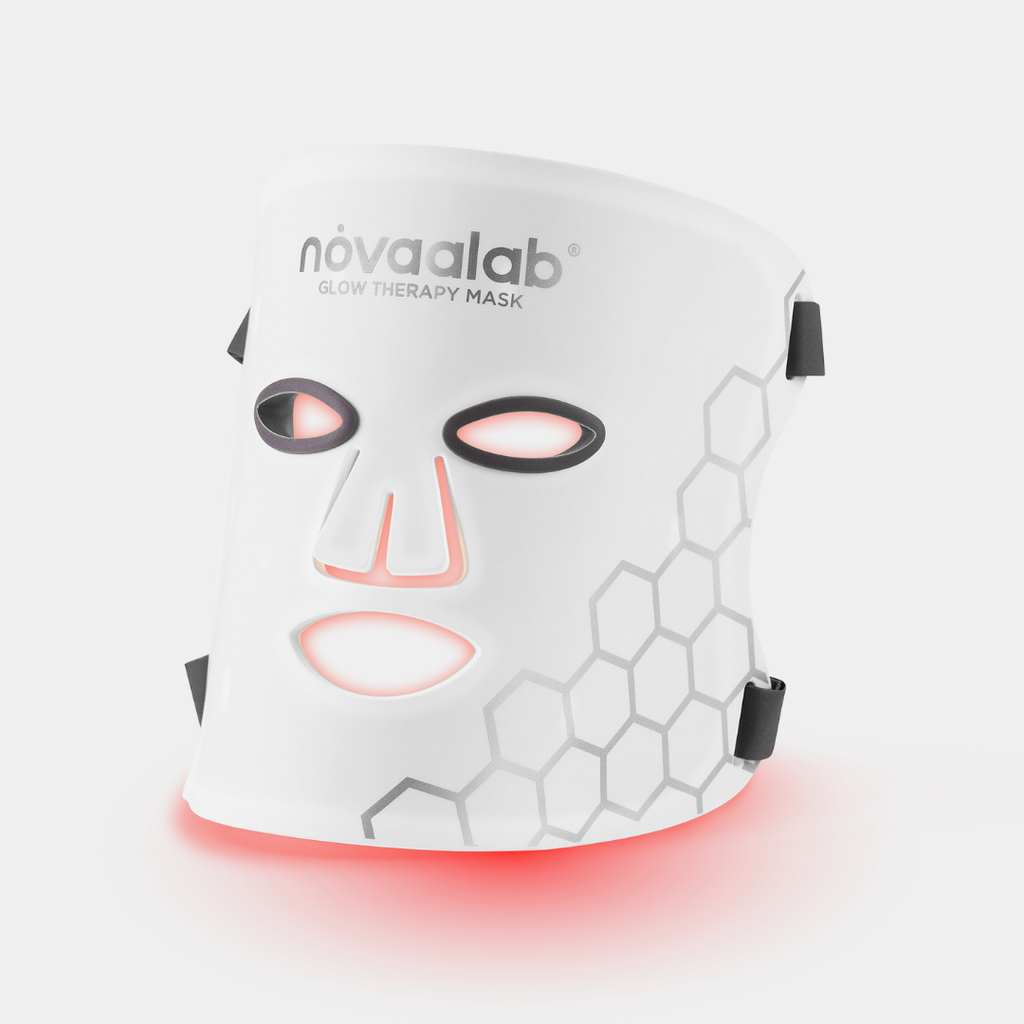
Skin concerns: An LED face mask makes it easier to stay consistent with regular use, like the Novaa Glow Therapy Mask.
-
Pain and recovery: Flexible, targeted coverage works best for areas like the back, hips, and joints, such as the Novaa Light Pad.
-
Targeted treatment: Handheld devices are useful for spot-specific support within a routine, like the Novaa Extra Strength Laser.
-
Full-body coverage: Larger systems allow for broader coverage across multiple areas, such as the Novaa Recovery Pod.
Choose Specs that Impact Results
A few key specs can influence how quickly results build:
-
Irradiance (power output): Higher output can deliver more usable light in less time, which may allow for shorter, more efficient sessions.
-
Wavelength range: The right wavelengths help ensure the light reaches the tissue you’re targeting. Red light (630–660 nm) is commonly used for skin and surface concerns, while near-infrared (800–850 nm) is better suited for deeper muscles and joints.
-
Coverage area: Larger coverage makes it easier to treat the full target area consistently, which can improve adherence and reduce missed spots.
Choose a setup you’ll use often enough to reach the weeks-to-months window where results tend to show up.
How to Tell If Red Light Therapy Is Working (and What to Do If It’s Not)
If you’re consistent, progress usually shows up as a trend, not a dramatic overnight change.
Signs You’re On Track
Within the first 2 to 4 weeks, look for small but repeatable shifts:
-
Less stiffness or soreness after activity
-
Skin redness settles more quickly
-
Faster recovery between workouts
-
Gradual improvements that stack over time
You don’t need a dramatic before and after. You’re looking for directional progress.
When to Adjust Your Approach
If you’ve been consistent (three to five times per week for about 6 weeks) and see no change, it’s worth checking the basics:
-
Session time: Are you staying within recommended ranges (often 10 to 30 minutes per area)?
-
Coverage: Are you treating the full target area, not just one small spot?
-
Wavelength: Does your goal require both red and near-infrared light?
-
Output: Is your device delivering enough usable light to the tissue?
In many cases, slow results come down to insufficient or inconsistent exposure, not the therapy itself.
When to Look Beyond Red Light Therapy
Red light therapy works best as a supportive tool, not a standalone solution for every condition. Consider additional support if:
-
Pain is worsening, spreading, or paired with numbness or weakness.
-
A wound isn’t improving or may be infected.
-
The issue is structural or long-standing and hasn’t responded to consistent use.
In these cases, red light therapy can still play a supportive role, but usually alongside other interventions.
What to Know Before You Start
Red light therapy is a non-invasive wellness tool and generally well tolerated with minimal side effects, but a few basics help keep it safe and effective:
-
Understanding the sensation: Mild warmth is common; temporary redness can occur and usually fades quickly.
-
Keeping your eyes safe: Avoid direct eye exposure and follow your device’s eye protection guidance.
-
Using as a supportive tool: This is not a replacement for professional healthcare or medical care, especially for significant pain, nerve symptoms, or wounds that need evaluation.
-
Getting your doctor’s approval: Check with a clinician or healthcare provider if you have a photosensitivity condition, are pregnant, or are undergoing cancer treatment.
Used consistently and appropriately, red light therapy is a low-risk addition to a broader plan, not a substitute for medical care when it’s needed.
Red Light Therapy Rewards Patience and Consistency
Red light therapy doesn’t deliver instant change — it works by supporting processes that build over time. Research shows a clear pattern:
-
Early changes, in days to weeks, are often tied to reduced inflammation and recovery.
-
Visible improvements start to emerge around 3 to 4 weeks.
-
Stronger, more lasting results reflect cumulative change within 8 to 12 weeks.
-
Deeper remodeling, in months 3 to 6+, takes longer to fully develop.
The goal isn’t to speed up the timeline. It’s to stay consistent long enough for those changes to build. At Novaalab, our red light therapy devices are designed around research-backed red (630–660 nm) and near-infrared (800–850 nm) wavelengths, making it easier to stay consistent and support results that last.


Leave a comment