




Red light therapy works best when it’s used consistently, not aggressively. For most at-home goals, a strong starting point is 3 to 5 sessions per week for about 10 to 30 minutes per treatment area, while daily use is often beneficial for chronic pain relief and post-workout muscle recovery.
That said, session time is only part of the equation. What really matters is the total dose of light energy (J/cm²) delivered to the treatment area. This depends on your device’s irradiance (power output), how close it is to your skin, and how long each session lasts. Higher irradiance and direct contact deliver more energy in less time, while lower irradiance or greater distance require longer sessions to reach a similar effect.
Most at-home red light therapy devices fall within a moderate range of exposure depending on the goal. Lower doses are typically sufficient for skin-focused treatments, while higher exposure is often used for larger muscles or deeper joints. Because red light therapy follows a biphasic dose response, more is not always better, and increasing session time doesn’t always improve results.
Key research highlights:
-
Consistency tends to outperform sporadic use. A 2025 study found that 3 to 4 sessions per week over 10+ weeks produced strong outcomes for pain relief and function while avoiding excessive energy delivery.
-
More is not always better. Red light therapy follows a biphasic dose response, meaning too little light may underdeliver results, while too much can reduce the therapeutic benefit.
-
Skin results build through remodeling. Controlled clinical studies found that consistent LED light therapy supported increased dermal collagen and reduced collagen breakdown, with improvements continuing over time.
-
Short-term consistency can still matter. In clinical research on chronic low back pain, meaningful improvements were reported after just two weeks of regular photobiomodulation sessions.
-
There’s a clear biological reason routines work. Research shows that red and near-infrared wavelengths help support mitochondrial function, ATP production, and anti-inflammatory signaling, which is why benefits are typically cumulative.
In practice, it’s less about spending more time under the device and more about delivering the right dose. Consistent, appropriately dosed sessions tend to outperform longer, more aggressive routines, helping support cellular repair, circulation, and recovery over time. With high-quality at-home from Novaalab, it’s easier to build a consistent routine that fits naturally into your skincare and wellness routine.
Recommended Red Light Therapy Frequency by Goal

Below, we’ll break down the recommended red light therapy frequency by goal, including how often to use it on the face, for everyday or chronic pain and muscle recovery, for full-body wellness, and how long to wait between sessions for the best results. Use the table as a starting point, then adjust based on your device’s power output, treatment area, and how your body responds. If you’re new to red light therapy, start at the lower end of the range for the first 1 to 2 weeks.
| Goal | Recommended Frequency | Typical Session Length |
|---|---|---|
| Skin rejuvenation | 3–5 sessions per week | 10–15 minutes |
| Everyday aches and pains | 3–5 sessions per week | 15–20 minutes |
| Chronic or more severe pain | 5–7 sessions per week | 15–25 minutes |
| Post-workout recovery | After training or daily | 15–20 minutes |
| General wellness / maintenance | 3–5 sessions per week | 10–20 minutes |
If you want an easy routine to follow, daily sessions are often ideal for chronic discomfort and consistent muscle recovery, while 3 to 5 sessions per week is a strong baseline for skin rejuvenation, everyday aches, and general wellness.
The key is consistent use over time. Shorter, regular sessions typically outperform long, inconsistent ones because the benefits of red and near-infrared light build cumulatively through cellular repair, improved blood circulation, ATP production, and collagen remodeling.
Skin Rejuvenation
Recommended frequency: 3 to 5 sessions per week
Typical session length: 10 to 15 minutes per treatment area
For skin rejuvenation, frequent sessions tend to deliver the best results because visible changes happen through a gradual collagen remodeling and skin cell renewal process.
Clinical LED studies using repeated treatment courses over multiple weeks have shown increased collagen production, reduced collagen-degrading enzymes, and measurable improvements in wrinkle depth, texture, and elasticity over time, which supports a cadence of 3 to 5 sessions per week as a strong baseline for cumulative skin-focused results.
This usually means skin tone, texture, and hydration may improve first, while fine lines and firmness shift more gradually over several weeks of consistent use. For skincare and anti-aging goals, shorter near-daily sessions are typically more effective than occasional longer treatments, because the benefits build cumulatively.
For skin-focused goals, lower doses are typically sufficient. In many cases, this falls roughly in the 5–15 J/cm² range. Because skin is the target itself, surface dose and target dose are closely aligned here, which is why these values are lower than for deeper-tissue goals.
Everyday Aches and Pains
Recommended frequency: 3 to 5 sessions per week
Typical session length: 15 to 20 minutes per treatment area
For everyday aches, muscle tightness, or mild stiffness from work, travel, or daily activity, a moderate routine is usually enough to support circulation, muscle relaxation, and tissue recovery.
Research on photobiomodulation found that 3 to 4 sessions per week over several weeks produced strong outcomes for pain and function, which makes 3 to 5 sessions per week a well-supported baseline for routine pain relief and recovery support.
Many people first notice improvements, such as less stiffness in the morning, easier movement after sitting, or faster relief from minor soreness, rather than instant pain elimination.
For general aches and mild discomfort, surface doses in the range of about 20–60 J/cm² are commonly used. This range reflects what's needed at the skin to deliver an effective dose to the muscle and connective tissue underneath.
Chronic or More Severe Pain
Recommended frequency: 5 to 7 sessions per week
Typical session length: 15 to 25 minutes per treatment area
For chronic discomfort, persistent inflammation, or more severe pain patterns, more frequent and slightly longer sessions are often the better approach.
Clinical research on chronic low back pain and arthritis has shown that more frequent sessions can lead to meaningful improvements in both pain and function, which supports a starting point of 5 to 7 sessions per week for more persistent issues.
This often translates to fewer flare-ups, less sharp pain during movement, and improved range of motion before complete relief sets in. Because chronic pain typically requires more cumulative support, daily or near-daily use is often the most effective starting point, provided session length remains reasonable.
Deeper joints and more persistent pain may benefit from higher doses, often in the range of about 60–150 J/cm². These values look high compared to skin-focused doses, but most of that energy is absorbed or scattered before reaching deep tissue.
Post-Workout Recovery
Recommended frequency: After training or daily
Typical session length: 15 to 20 minutes per treatment area
Red light therapy is especially effective for muscle recovery, post-workout soreness, and stiffness, particularly when used consistently around your training schedule.
Research supports the role of photobiomodulation in reducing inflammatory signaling, improving blood flow, and supporting faster recovery, which makes post-workout use or daily sessions during heavier training periods a practical, evidence-aligned routine.
This may look like less next-day soreness, quicker return to training, and reduced stiffness after heavy lifts, cardio sessions, or long runs. Pairing sessions with workouts is often the easiest way to stay consistent.
For muscle recovery, surface doses in the range of about 30–100 J/cm² are commonly used, depending on muscle size and depth. Larger or deeper muscle groups may benefit from the higher end of this range, while smaller, more superficial areas typically require less.
General Wellness / Maintenance
Recommended frequency: 3 to 5 sessions per week
Typical session length: 10 to 20 minutes per treatment area
For general wellness, full-body maintenance, or ongoing recovery support, a moderate routine is typically enough.
Because red and near-infrared light help support ATP production, blood circulation, and cellular repair, 3 to 5 sessions per week offers a sustainable way to maintain those cumulative benefits without overcomplicating the routine.
Over time, this may feel like less overall stiffness, better day-to-day recovery, and greater resilience to physical stress, though results vary by individual and device.
For maintenance and general wellness, surface doses around 20–60 J/cm² are typically sufficient, with consistency playing a larger role than increasing session length.
Understanding Red Light Therapy Doses
When you see a dose recommendation like 20–60 J/cm², it's worth understanding what that number actually refers to. In red light therapy, there are really two different doses to think about.
-
Surface dose is the amount of light energy delivered to your skin. This is the number you can actually measure and control, based on your device's irradiance and how long you use it.
-
Target tissue dose is the amount of energy that actually reaches the structure you're trying to influence, whether that's skin cells or an inflamed joint a few centimeters below the surface.
These two doses aren't the same. As light passes through skin and tissue, some is reflected, some is absorbed by melanin and blood, and some is scattered. By the time photons reach a deep joint, only a fraction of the original energy remains. Red light (around 630–660 nm) primarily affects surface tissue, while near-infrared light (around 800–870 nm) penetrates deeper into muscles and joints.
This is why dose recommendations and wavelengths differ depending on the goal. Skin rejuvenation uses lower J/cm² values because the target is right at the surface — almost no energy is lost before reaching it. Deep joint or muscle treatments use higher values not because deeper tissue needs more energy at the cellular level, but because more must be applied at the surface to compensate for what's lost along the way.
How to Estimate Your Dose
You can roughly calculate the surface dose your device delivers using a simple formula:
Dose (J/cm²) = Irradiance (mW/cm²) × Time (minutes) × 0.06
Irradiance is usually listed in your device's specifications, often at multiple distances (0 inches, 6 inches, etc.). For example:
-
A pad delivering 150 mW/cm² in direct contact, used for 10 minutes, delivers about 90 J/cm² at the surface.
-
A mask delivering 16 mW/cm² at contact, used for 10 minutes, delivers about 9.6 J/cm².
-
A targeted laser at 800 mW/cm², used for just 2 minutes, delivers about 96 J/cm² to a small area.
Keep in mind this is a surface-dose estimate. The dose actually reaching deeper tissue will be lower, which is already accounted for in the target ranges throughout this article. Also note that irradiance drops significantly with distance. A panel held 6 inches from the skin may deliver less than half the energy it would in direct contact, so your actual dose depends heavily on how you position the device.
Why Consistent Sessions Drive Better Results
Red light therapy is not a one-session fix. Instead, it works by supporting biological processes that build over time, which is why consistency matters so much.
A helpful way to think about it is this: Each session acts like a small, repeatable signal that nudges your cells toward repair and recovery. On its own, one session may offer only subtle benefits, but with consistent use, those signals accumulate into changes you can actually feel or see — whether that’s less morning stiffness, fewer flare-ups after lifting, faster muscle recovery, or gradually smoother, firmer skin.
This cumulative effect happens because red and near-infrared light support processes that respond best to repeated exposure over time, not one isolated session.
-
ATP production builds ongoing cellular support by helping mitochondria produce the energy your cells use for repair, recovery, and regeneration
-
Blood flow and circulation improve gradually, helping deliver oxygen and nutrients to tissues that need support
-
Inflammatory signaling can become easier to manage, which may help calm sore joints, strained muscles, and reactive skin over time
-
Collagen remodeling takes repeated stimulation, which is why smoother texture, firmness, and skin rejuvenation happen gradually rather than overnight.
This is why daily use is often considered safe and effective when session length stays within your device’s recommended range. In practice, daily use generally means one session per treatment area every 24 hours, though many people comfortably treat different areas at different times of day.
This is also why inconsistency can slow progress. Missing an occasional day is usually not a problem, and you do not need to “start over.” But if sessions become too sporadic — for example, using the device heavily for a few days and then not again for a week or two — it becomes harder to keep that repair signal active long enough for cumulative benefits to build. In those cases, results may feel slower, less noticeable, or plateau more easily.
More Isn’t Always Better: Understanding the Biphasic Dose Response
One of the most important things to understand about red light therapy is that more light does not automatically mean better results.
Photobiomodulation is known for what’s called a biphasic dose response, which means there’s an optimal therapeutic window. A moderate dose can help stimulate beneficial effects like ATP production, circulation, collagen remodeling, and recovery, while too much light exposure may actually reduce the response and lead to diminishing returns. In other words, doubling your session length does not necessarily double your results — and in some cases, it may slow progress.
This is why consistency and proper dosing matter more than pushing longer or more frequent sessions.

What Overuse Can Look Like in Real Life
Overdoing red light therapy usually doesn’t cause dramatic symptoms, but there are a few signs that your sessions may be too long or too frequent:
-
Lingering redness or skin irritation, especially on the face or sensitive skin
-
Plateaued results, even after adding more time or more sessions
-
Unusual fatigue or feeling “wired” after treatment
-
Increased skin sensitivity or dryness
-
Soreness that doesn’t seem to improve despite consistent use
Often, the biggest sign is simply that results stop improving even though you’re doing more.
How to Correct Overuse
If you think you may be overdoing it, the best approach is to make one adjustment at a time. Start by reducing session length first, since that’s often the main issue. For example, if you’ve been doing 20-minute sessions, try scaling back to 10 to 12 minutes while keeping your frequency the same.
Stay with that routine for 1 to 2 weeks and reassess how your skin, muscles, or target area responds. If progress still feels stalled, then consider adding 1 to 2 rest days per week, such as shifting from daily use to 5 sessions per week.
In many cases, the right next step is less time per session, not fewer sessions.
Results Timeline: What to Expect with Consistent Use
A realistic timeline helps you stay consistent long enough to know whether your routine is actually working.
Because red light therapy works through cumulative cellular change, some benefits can appear relatively quickly, while more structural improvements — like collagen remodeling, improved elasticity, and skin texture changes — usually take longer. For a deeper look at how red light therapy results progress over time, read our article on How Long Does Red Light Therapy Take to Work?
| Timeline | What You May Notice |
|---|---|
| Weeks 1–2 | Early changes such as less next-day soreness, reduced muscle tightness, slightly less pain during movement, or calmer-looking skin after consistent use |
| Weeks 3–6 | More noticeable improvements in pain relief, recovery, reduced stiffness, and early visible skin changes like smoother texture or more even tone |
| Weeks 8–12 | Clearer cumulative benefits, including more stable pain relief, faster muscle recovery, improved skin firmness, and early changes in fine lines |
| Months 4–6 | Longer-term benefits become more apparent, such as more noticeable skin rejuvenation, collagen-driven improvements in elasticity, and sustained recovery or wellness support |
The key takeaway is simple: Give your routine 8 to 12 weeks before deciding whether it’s working, unless you’re experiencing irritation, increased sensitivity, or another reason to adjust sooner.
Practical Tips for Building a Consistent At-Home Routine
Once you’ve established the right frequency and session length, the biggest factor in getting results is consistency. Red light therapy works best when it becomes part of a routine you can realistically maintain for weeks or months. The “best” time to use it is not necessarily a perfect scientific window — it’s the time you’re most likely to repeat consistently.
For many people, that means morning sessions fit naturally into a skincare or wellness routine, while evening use works well for recovery, pain relief, and post-workout soreness. If you train regularly, using your device immediately after workouts is often one of the easiest ways to stay consistent because it anchors the habit to something you already do.
A few simple strategies can make your routine easier to maintain:
-
Pair sessions with an existing habit, such as your morning skincare routine, evening wind-down, or post-workout cooldown.
-
Keep your setup easy to access, so your device is ready to use rather than tucked away.
-
Treat different areas at different times of day if needed, such as the face in the morning and the back or legs in the evening.
-
Keep total daily exposure within your device’s recommended range, which for many users means about 10 to 30 total minutes per day.
-
Use clean, product-free skin during facial sessions, then follow with serums, moisturizers, or hydration-focused skincare afterward.
-
Pair recovery-focused sessions with stretching, mobility work, or physical therapy exercises to support blood flow and muscle recovery.
If you’re combining red light therapy with more aggressive treatments, such as chemical peels, strong lasers, or UV tanning, it’s usually best to separate those treatments by day and follow professional guidance.
The most effective routine is the one you can maintain without constantly increasing time or frequency. In most cases, short, repeatable sessions will outperform an aggressive routine that’s difficult to sustain.
How to Choose the Right Device for Consistent Results
When choosing an at-home red light therapy device, it’s important to evaluate whether the device can help you consistently deliver an appropriate dose of light energy (J/cm²) for your goals. Power output (irradiance) contributes to that dose, but it’s only one part of the equation — distance from the skin and session length ultimately determine how much energy your body receives.
Many Novaalab devices are built with relatively high irradiance output, allowing users to reach effective dose ranges more quickly, especially when used in direct contact or close proximity to the skin.
Below are our recommended devices depending on your goal:
-
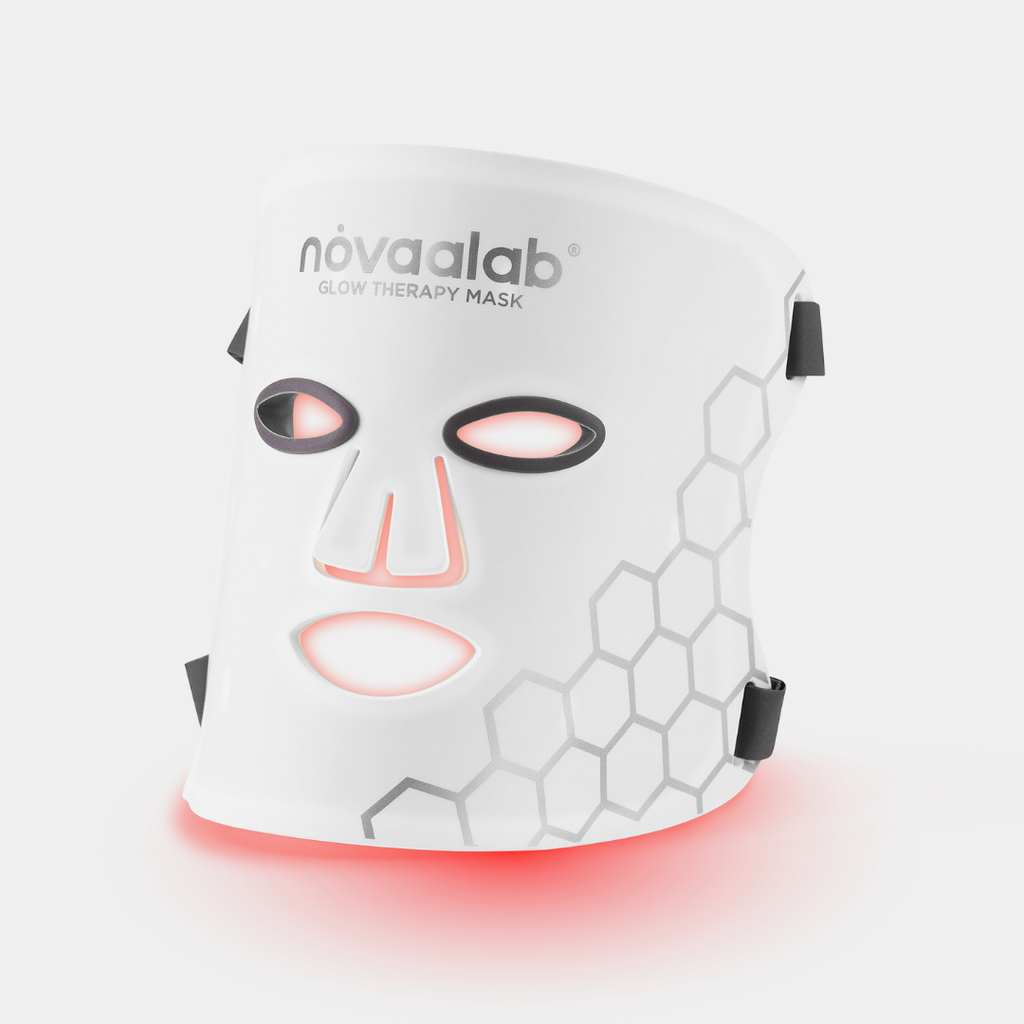
Facial skincare, anti-aging, and skin rejuvenation: Novaa Glow Therapy Mask (red and blue at 0 inches: 16.2 mW/cm²)
-
Larger-area pain relief (back, hips, thighs, arms): Novaa Light Pad (at 0 inches: 150 mW / cm²) or Deep Healing Pad XL (at 0": 200 mW / cm²)
-
Joint-specific support (knees, ankles, feet): Novaa Knee Ultra or Novaa Light Boot (up to 132 mW/cm² at 0 inch)
-
Targeted muscle recovery and spot treatment: Novaa Extra Strength Laser (at 0 inches: 800 mW / cm²)
-
Full-body recovery and wellness routines: Novaa Recovery Pod (at 0 inches: 130 mw/cm²)
If you’re unsure which format best fits your needs, think first about the area you’ll treat most often and how easy it is to use consistently. For example, someone focused on facial skin health may benefit most from a mask that fits naturally into a daily skincare routine, while someone treating chronic back pain may be more consistent with a larger pad or full-body device. The key is to choose the device that makes consistent treatment feel easy, because consistency — not complexity — is what drives results.
Safety Tips for At-Home Red Light Therapy
Red light therapy is generally considered a safe, non-invasive treatment when used as directed, but it’s still important to follow a few basic precautions.
-
Use protective goggles if recommended, especially with higher-output panels or targeted laser devices.
-
Start at the lower end of the suggested session-length range if you have sensitive or reactive skin.
-
Stop or reduce use if you experience lingering redness, irritation, or unusual discomfort.
-
Speak with a healthcare provider if you have an underlying medical condition, are pregnant, or are using prescription photosensitizing medications.
The goal is to build a routine that feels consistent, comfortable, and sustainable, not to push longer sessions than your body or device calls for.
Build a Routine That Supports Real Results
The ideal red light therapy routine isn’t about doing as much as possible — it’s about finding the right frequency and session length for your goals, then sticking with it consistently. For most people, a routine of 3 to 5 sessions per week (or daily use for goals like skincare or chronic pain) is enough to support meaningful results over time. Consistent sessions support cellular repair, collagen production, improved circulation, and recovery — the processes that drive real results.
If you’re ready to build a routine that fits your goals, Novaalab’s at-home red light therapy devices are designed to make consistent use simple, effective, and easy to maintain — whether you’re targeting skin rejuvenation, pain relief, or full-body recovery.


Leave a comment