




For many people, combining red and blue light therapy for acne often delivers more complete results. If your breakouts are red, swollen, or slow to heal, light therapy can help with these common skin conditions, but not all light works the same way. Most LED face masks combine these two wavelengths of light:
-
Red light (630–660 nm), which reduces inflammation and supports healing
- Blue light (450–470 nm), which targets acne-causing bacteria
If your acne is mostly inflamed (like papules and pustules), red light tends to do the heavy lifting. It works beneath the surface to calm inflammatory signals and support skin repair, rather than clearing pores directly. If your acne is more bacteria-driven (frequent active breakouts), blue light plays a bigger role by helping reduce acne-causing bacteria like P. acnes (also known as propionibacterium acnes) on the skin. For many people, acne includes both, which is why combining red and blue light often delivers more complete results.
Light therapy is also best used as a supportive tool, not a replacement for your core acne routine (like cleansing, proven topicals, or prescription care when needed). And because it works with your skin’s natural repair processes, results are gradual, not instant. Most people start noticing improvements in 4 to 8 weeks, with more visible, sustained changes after 8 to 12-plus weeks of consistent use.
Here’s what the research actually shows:
-
Red light can safely reduce inflammatory acne lesions. A meta-analysis of randomized controlled trials found red light therapy performed similarly to conventional treatments for acne, with minimal to no side effects, making it a viable option for ongoing use.
-
Best results come from combining red light with other wavelengths. Evidence shows red + blue light together outperform either alone, combining anti-inflammatory benefits (red) with antibacterial effects (blue) for more complete acne control.
-
Red light therapy works by calming inflammation at the source. Research on photobiomodulation shows red and near-infrared light can reduce inflammatory markers, oxidative stress, and immune overactivation — all key contributors to acne severity.
-
Red light therapy helps skin to repair and recover more efficiently after breakouts. Studies show red light increases cellular energy (ATP) and supports tissue repair, helping skin heal faster and potentially reducing lingering redness or irritation.
-
Red light therapy is non-invasive, well-tolerated, and suitable for at-home use. Dermatology reviews consistently describe red light therapy as safe, convenient, and low-risk, with growing use in both clinical and home settings for acne support.
- At-home LED devices can meaningfully improve acne over time. A systematic review found significant reductions in both inflammatory and non-inflammatory lesions using red and/or blue LED devices, with especially strong results when combined.
At Novaalab, our devices are designed around the 630 nm to 660 nm red light range — the wavelengths most commonly studied for inflammation, healing, and acne support. The goal is simple: Create a non-invasive, easy-to-use routine you can realistically stick with at home.
Different Types of Acne — and What They Mean for Treatment
Now that you know what red light therapy actually helps with, the next step is simple, but important: Figure out what type of acne you’re dealing with. Not all breakouts behave the same way. Two people can have acne that looks similar on the surface, but the underlying cause — and what actually helps — can be very different.
Light therapy works best when you match the wavelength to the problem:
- Blue light helps target acne-causing bacteria.
- Red light helps reduce inflammation and support healing.

-
Red, swollen, tender pimples? Red light can be a strong add-on to calm inflammation and speed up recovery.
-
Frequent active breakouts? Blue light helps reduce acne-causing bacteria, making it useful for prevention and control.
- Blackheads, whiteheads, or rough texture? You’ll usually need pore-clearing ingredients first (like salicylic acid or retinoids), with light therapy playing a smaller supporting role.
| Acne Type | What It Looks Like | Main Drivers | Will Light Therapy Help? |
|---|---|---|---|
| Inflammatory acne | Red, swollen bumps (papules/pustules), sometimes painful | Inflammation “signals” in the skin + irritation around the follicle | Often yes — best fit |
| Non-inflammatory acne (comedonal) | Blackheads and whiteheads; less red, less sore | Oil + buildup inside pores | Limited — often less noticeable change |
| Cystic acne | Deep, painful lumps under the skin | Strong inflammation deeper in tissue; often hormonal | Supportive — many people still need medical guidance |
| Post-inflammatory hyperpigmentation (PIH) | Dark spots left after acne heals | Pigment changes triggered by inflammation | May help over time as skin calms and recovers |
| Acne scarring | Depressed (pitted) or uneven skin texture after breakouts | Collagen loss during healing (atrophic scarring); sometimes excess collagen (raised scars) | May support skin recovery and improve appearance over time, but won’t replace lost collagen or fully reverse deeper scars |
Most people don’t fall neatly into one category, and that’s completely normal. If your acne is mixed (for example: some clogged pores + some inflamed breakouts), you don’t have to choose just one approach.
You can combine:
- Blue light to help reduce bacteria
- Red light to calm inflammation and support healing
- Targeted skincare (like exfoliants or retinoids) to clear pores and prevent buildup
This layered approach aligns with research showing that combining wavelengths and treatments leads to more complete acne control than relying on a single method alone.
How Light Therapy Supports Acne-Prone Skin
After you understand your acne type, the next question is: Where does red and blue light actually help? Acne isn’t just clogged pores — it’s what happens after. Oil and buildup get trapped, the skin becomes irritated, and your immune system triggers inflammation. That’s what turns a small clog into a red, swollen, lingering breakout.
Light therapy targets different parts of this cycle:
- Red light helps calm inflammation and support skin repair.
- Blue light helps reduce acne-causing bacteria on the skin.

| Acne Driver | What’s Happening in Your Skin | How Light Therapy May Help |
|---|---|---|
| Inflammation | Skin sends out “alarm signals” that cause redness, swelling, and tenderness. | Helps calm those signals, so breakouts look and feel less angry |
| Excess oil (sebum) | Oil builds up and makes it easier for pores to get congested. | May support more balanced oil gland activity over time |
| Inflamed breakouts | Red pimples are more reactive and can leave longer-lasting marks. | Offers the most noticeable improvements for inflammatory acne compared to other types |
| Slower skin recovery | Repeated inflammation slows the skin’s repair process. | Supports cellular energy (ATP) to help skin repair more efficiently |
| Post-acne marks & texture | Uneven healing can leave marks, dents, or bumps. | May support collagen and smoother-looking recovery over time |
| “Cell stress” during breakouts | Inflammation creates oxidative stress that prolongs healing. | Helps reduce oxidative stress — helping cells to rebalance and recover |
Red light therapy is most useful when your goal is:
- Calmer-looking skin (less redness and swelling)
- Less painful breakouts
- Faster recovery after acne
- Better overall skin healing over time
Blue light complements this by helping control bacteria — so together, they address both why breakouts form and why they look and feel worse.
Reduces Inflammation (the Root of Red, Painful Breakouts)
The redness, swelling, and tenderness that make acne feel severe are driven more by inflammation than the clogged pore itself. Red light therapy targets this directly by helping calm the skin’s inflammatory response.
Research on photobiomodulation shows that red light can reduce inflammatory markers, regulate immune activity, and lower oxidative stress in the skin — all of which contribute to how intense breakouts look and feel. Dermatology reviews also consistently position red light as an anti-inflammatory treatment approach for acne, which helps explain why it’s most effective for inflamed lesions like papules and pustules.
Helps Skin Heal Faster After Breakouts
Acne isn’t just about preventing pimples — it’s also about how quickly your skin recovers once they appear. Red light therapy supports this process by improving how efficiently skin cells repair damage.
At a cellular level, red light increases ATP (energy) production and helps regulate oxidative stress, both of which are essential for tissue repair. Supporting this, LED therapy research shows red light can enhance skin regeneration and recovery, which is especially valuable for acne-prone skin that’s repeatedly cycling through inflammation.
Improves the Appearance of Post-Acne Marks
For many people, the most frustrating part of acne is what comes after — dark spots, lingering redness, or uneven texture. Red light therapy may help improve how the skin heals during this phase.
Studies show red light supports skin remodeling and collagen production, which can help improve tone and texture over time. However, while it may help fade newer marks, redness, and mild textural irregularities, it does not replace collagen already lost in deeper, pitted acne scars. Its biggest benefit here is supporting more even healing after breakouts and helping post-acne marks become less noticeable over time.
Works Best on Inflammatory Acne (Not Clogged Pores)
Red light therapy isn’t a one-size-fits-all solution, and understanding where it works best is key to setting expectations. Its benefits are most noticeable in inflammatory acne, not clogged pores.
A meta-analysis of randomized controlled trials found that red light therapy performs similarly to standard treatments for acne, particularly for inflammatory lesions, but does not show strong advantages for non-inflammatory acne like blackheads and whiteheads. Broader reviews on light-based therapies reinforce that the strongest evidence exists for treating inflammatory acne, not comedonal acne.
Enhances Results When Combined with Blue Light
Acne is driven by multiple factors, including bacteria, oil, and inflammation, which is why combination approaches tend to be more effective than targeting just one pathway.
Research shows that combining red and blue light produces better outcomes than either alone: Blue light targets acne-causing bacteria, while red light reduces inflammation and supports healing. A systematic review of at-home LED devices found this combination led to greater reductions in both inflammatory and non-inflammatory lesions, with strong tolerability and minimal side effects.
Safe, Non-Invasive, and Suitable for Consistent Use
One of the biggest advantages of red light therapy is that it’s easy to use consistently without the trade-offs of harsher treatments. This matters because acne is a long-term condition that typically requires ongoing management.
Across clinical and dermatology reviews, red light therapy is consistently described as non-invasive, well-tolerated, and associated with minimal to no adverse effects, both in-office and with at-home devices. This makes it a practical option for people looking for a lower-risk, non-drug approach they can maintain over time, especially when compared to harsher treatments like chemical peels.
How to Use Red and Blue Light Therapy for Acne
This is where most people get it wrong: Light therapy isn’t about intensity, it’s about consistency. Short, regular sessions done a few times per week tend to deliver better results than occasional long sessions. That’s because light therapy works by gradually influencing your skin’s biology — calming inflammation, reducing bacteria, and supporting repair over time.
Here’s a starting point:
-
Wavelengths:
- Red: 630 nm to 660 nm (inflammation + healing)
- Blue: 450 nm to 470 nm (bacteria support)
- Session duration: 10 to 20 minutes per session
-
Frequency:
- Active breakouts: 3 to 5 times per week
- Maintenance / post-acne support: 2 to 3 times per week
Research on photobiomodulation also highlights a dose-dependent response, meaning more isn’t always better. Consistent, moderate exposure tends to produce the best results.
Where Light Therapy Fits in a Simple Routine
The easiest way to stay consistent is to anchor red and blue light therapy into a routine you already follow.
Morning option
- Gentle cleanse (non-stripping)
- Light therapy session (10–20 min)
- Wait 5 to 10 minutes
- Serum or moisturizer
- Sunscreen
Evening option
- Gentle cleanse (non-stripping)
- Light therapy session (10–20 min)
- Wait 5 to 10 minutes
- Acne treatments (retinoids, azelaic acid, etc.)
- Moisturizer
Light therapy is typically used on clean, dry skin, and placing it before stronger acne treatments can help reduce overall irritation. This is important because irritation can worsen inflammation, one of the key drivers of acne. The goal isn’t to overhaul your treatment plan; it's to layer red light into it in a way you can stick with consistently.
Red and Blue Light Therapy Results Timeline for Acne
Light therapy works gradually, so it helps to track progress by weeks, not days. Because it targets inflammation and skin repair (not instant pore clearing), changes tend to build over time. This is especially true if your acne is influenced by factors like hormones, stress, or ongoing irritation.
Here’s a realistic, research-aligned timeline:
-
Weeks 1–2: Skin may start to feel less reactive. Redness can look slightly calmer, but breakouts can still occur as usual.
-
Weeks 3–4: Inflamed pimples may begin to flatten and resolve faster, with less tenderness or “sting.”
-
Weeks 5–8: More noticeable changes often appear, including a reduction in inflammatory lesions and more even fading of post-acne redness.
- Weeks 9–12+: Continued improvements in overall tone and texture. Newer post-acne marks may look lighter, and early stage scarring can appear subtly smoother over time.
Why Results Vary
Not everyone follows the same timeline, and a few key factors make a big difference:
-
Acne type: Inflammatory acne (red, swollen breakouts) tends to respond faster than clogged pores or deep cystic acne.
-
Consistency: Regular use (3–5 sessions per week) is far more effective than inconsistent use.
-
Irritation levels: Over-exfoliating or using harsh products can keep inflammation elevated and slow visible progress.
- Severity: Mild-to-moderate acne typically improves faster than more persistent or severe acne cases.
How to Evaluate Your Progress
If you’re not seeing meaningful changes by around week 8, it’s worth taking a step back and reassessing:
- Is your acne mostly clogged pores rather than inflamed breakouts?
- Are you using light therapy consistently enough to see results?
- Could other products in your routine be causing irritation and masking progress?
Red light therapy works best when it’s aligned with your acne type and used consistently, so small adjustments here can make a noticeable difference.
Using Light Therapy with Other Acne Treatments
Once you have the timing down, the next step is figuring out how red and blue light fits alongside the products you already use. The goal isn’t to replace your routine, it’s to make it work better. Because red light helps calm inflammation and reduce irritation, it can make it easier for your skin to tolerate proven acne treatment options like retinoids, benzoyl peroxide, or exfoliating acids.
A simple rule most people follow: Use light first, then apply stronger topical treatments after. This sequencing keeps your skin calm going in, rather than layering potentially irritating products before your session.
| Treatment | How It Works | How to Use With Light Therapy | Timing Notes |
|---|---|---|---|
| Retinoids (Tretinoin, Adapalene) |
Helps prevent clogged pores by increasing skin turnover | Use light therapy first, then apply retinoid. | Retinoids can be irritating; best used at night + daily sunscreen |
| Benzoyl peroxide | Helps reduce acne-causing bacteria and inflammation | Use light therapy first, then apply. | Can be drying; may irritate if you stack too many actives |
| Salicylic acid (BHA) |
Helps clear oil and buildup inside pores | Use light therapy first, then apply. | Can increase dryness; sunscreen recommended |
| Niacinamide | Helps calm redness and support oil balance | Use light therapy first, then apply. | Generally easy to combine |
| Azelaic acid | Supports clearer pores and more even skin tone | Use light therapy first, then apply. | Often well-tolerated; mild tingling can happen |
| Oral antibiotics (Doxycycline, Minocycline) |
Helps reduce inflammation and bacteria systemically | Use alongside light therapy. | Some are photosensitizing — check with your prescriber |
| Isotretinoin (Accutane) |
Strongly reduces oil production over time | Ask your dermatologist before adding. | Skin can become extremely dry or sensitive — prioritize barrier support |
Red and blue light therapy tends to be most useful when it helps you get more out of a simple, well-chosen routine, not when it’s used as an excuse to layer on more products. If anything, it often works best as the “calming layer” that makes everything else easier to tolerate, especially if your skin is prone to irritation, dryness, or over-treatment.
Before You Start: Safety and Skin Considerations
After you’ve figured out where light therapy fits into your routine, the final step is making sure you’re using light therapy in a low-risk, sustainable way. In dermatology literature, photobiomodulation is consistently described as non-invasive, well-tolerated, and suitable for a wide range of skin types, including darker skin tones. Unlike many acne treatments, it doesn’t typically cause peeling, barrier damage, or the kind of photosensitivity associated with stronger topical or oral medications.
Generally considered low-risk:
- Non-invasive with no downtime
- Typically comfortable (no burning or peeling phase)
- Suitable for most skin tones
- Not commonly associated with photosensitivity seen with some acne treatments
Use caution or get medical input if:
- You have an active skin infection (wait until it clears).
- You have open, draining lesions that are easily irritated.
- You’re using photosensitizing medications (timing and exposure may need adjustment).
- You have a history of skin cancer or concerning lesions (best to check with a dermatologist first).
Skin type tips:
-
Sensitive or reactive skin: Start with shorter sessions (5–10 minutes) and build gradually to avoid overstimulation.
-
Dry or dehydrated skin: Focus on barrier support (moisturizer, fewer harsh topical treatments) since irritation can slow progress.
- Darker skin tones: Red and blue light are widely considered a safe option, though improvements in post-acne marks tend to be gradual and variable.
The safest and most effective approach is usually the one your skin can tolerate consistently without irritation. If your skin starts to look more red, tight, or reactive, it’s a sign to scale back — whether that’s shorter sessions, fewer active topicals, or more recovery time. With light therapy, steady and low-irritation almost always beats pushing too hard.
Which Device Is Best for Acne?
At this point, the question isn’t whether light therapy can help; it’s which setup you’ll actually use consistently. The benefits of red and blue light therapy come from repeat exposure over time, not one long session. So the “best” device is the one that fits your acne location and your routine without adding friction.
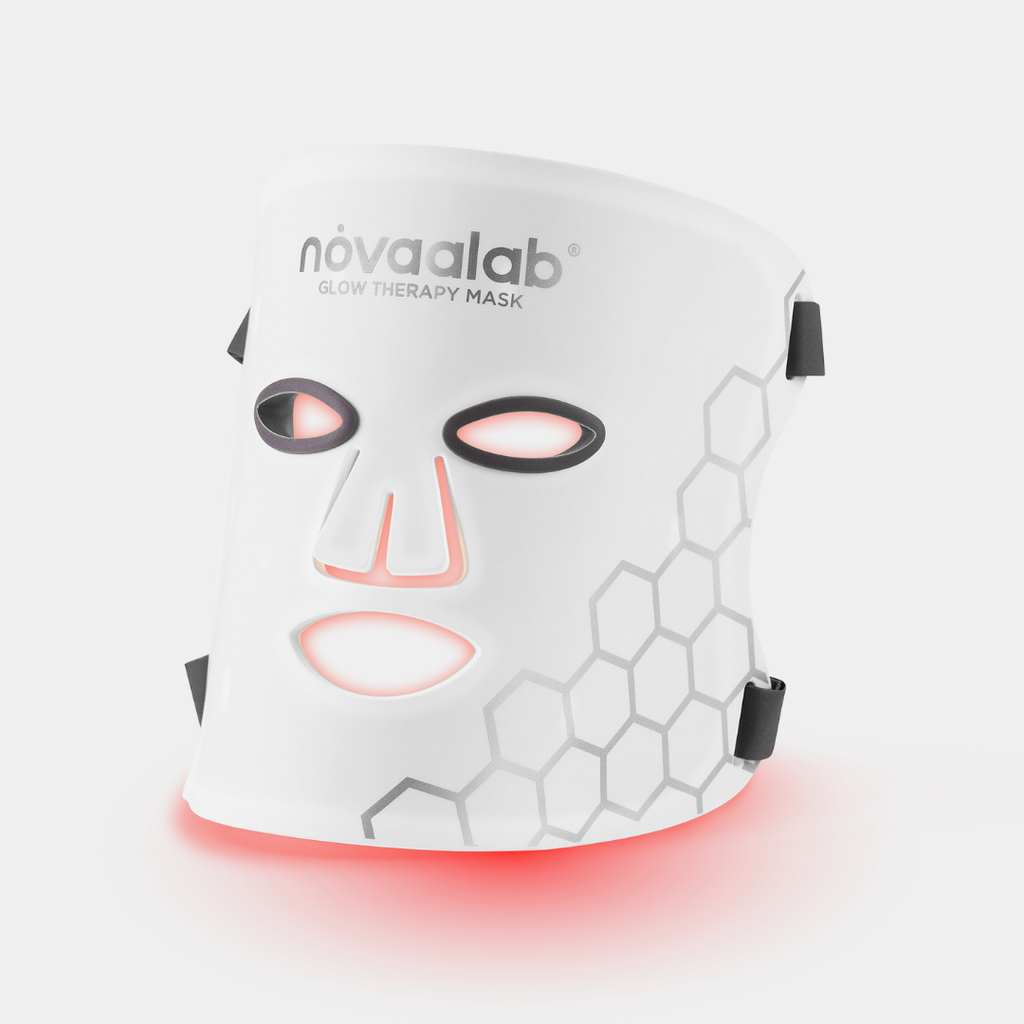
Novaa Glow Therapy Mask (Face)
If your acne is mainly on your cheeks, chin, jawline, or forehead, a mask format makes consistency much easier. The Novaa Glow Therapy Mask delivers full-face coverage in a hands-free session, so you don’t have to reposition or hold anything in place.
It combines multiple clinically relevant wavelengths:
-
Red (630 nm): Helps reduce inflammation and support healing
-
Blue (450 nm): Targets acne-causing bacteria
-
Yellow (580 nm): Supports overall skin tone
- Near-infrared (830 nm): Reaches deeper layers for recovery support
This combination aligns with research showing that multi-wavelength approaches (especially red + blue light) tend to produce better acne outcomes than single wavelengths alone.
Novaa Light Switch (Targeted + Multi-Mode Use)
If you want more flexibility — or if you’re dealing with smaller, stubborn areas — a handheld device like the Novaa Light Switch offers a more targeted approach.
It includes multiple interchangeable heads, allowing you to tailor treatment based on your skin’s needs:
-
Red + near-infrared LED head (620–625 nm, 845–850 nm): Supports inflammation reduction, skin repair, and can even help with the appearance of fine lines
-
Red + infrared laser head (650 nm, 808 nm): More concentrated energy for targeted areas
- Multi-light head (red, blue, yellow, infrared): Combines antibacterial and anti-inflammatory wavelengths for acne support
This makes it especially useful if you want to spot-treat breakouts or combine different light types in a more customizable way.
Novaa Light Pad (Body Acne)
For acne on the back, chest, or shoulders, coverage becomes the limiting factor — and this is where larger devices make a real difference.
The Novaa Light Pad is designed to treat broad surface areas efficiently, using a high-density array of light chips:
-
150 × red lights (660 nm): Supports inflammation reduction and skin healing
- 300 × near-infrared lights (850 nm): Penetrates deeper to support recovery and repair
This combination allows the device to deliver both surface-level and deeper support, which is especially useful for body acne that tends to be more persistent or spread out on the body.
Key Specs to Look For
If you’re comparing devices, these are the specs that actually matter for acne:
-
Wavelengths: Research consistently shows that red + blue light combinations are more effective for acne than single wavelengths alone.
- Red (630–660 nm): Supports inflammation reduction and healing
- Blue (~450–470 nm): Helps target acne-causing bacteria
- Near-infrared (800–850 nm): Supports deeper repair and recovery
-
Session time: 10 to 30 minutes per session is the most commonly used range in both clinical and at-home settings
-
Frequency: Consistency matters more than intensity
- Active acne: 3 to 5 times per week
- Maintenance: 2 to 3 times per week
- Coverage: Choose a format (mask, pad, handheld) that matches your acne location so you can treat the area fully and consistently.
A Science-Backed Tool for Calmer, Clearer Skin
When you’re dealing with acne, the goal isn’t just to “dry it out” or chase quick fixes — it’s to reduce inflammation, support healing, and keep your skin balanced over time. Red and blue light therapy works by helping regulate inflammatory activity, improve cellular energy (ATP), reduce acne-causing bacteria, and support the skin’s natural repair processes. That’s why it’s increasingly used as a non-invasive addition to acne routines, especially for inflamed breakouts and post-acne recovery.
Novaalab designs acne-targeting devices using research-backed wavelengths (630–660 nm red and 450–470 nm) to target both surface-level inflammation and deeper skin recovery.
For those looking to support their skin at home, Novaalab devices offer:
-
Hands-free, full-face options like the Novaa Glow Therapy Mask for consistent facial coverage
-
Flexible, targeted tools like the Novaa Light Switch for spot treatment and multi-wavelength use
-
Broad-coverage solutions like the Novaa Light Pad for body acne and larger areas
-
A non-invasive, low-irritation approach that fits easily into your existing routine
- A 60-day “Love It or Return It” guarantee so you can try it risk-free
Whether you’re trying to calm persistent breakouts, reduce post-acne redness, or build a routine your skin can actually tolerate long-term, light therapy offers a steady, research-informed way to support clearer, healthier-looking skin from home.


Leave a comment