


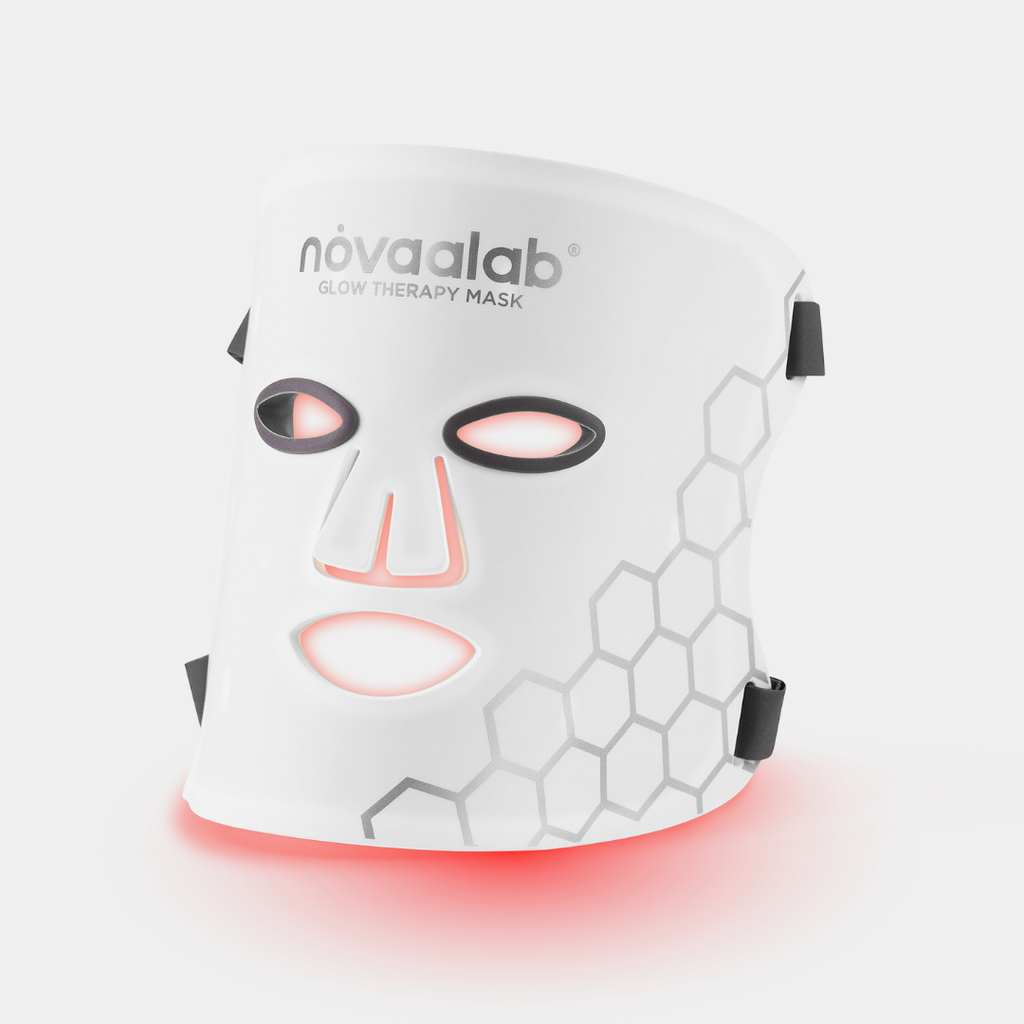


Red and near-infrared light therapy (also called photobiomodulation) has been studied as a way to help reduce tennis elbow pain and improve function, particularly when it’s used consistently alongside a basic rehab program. However, results may vary depending on factors like dose, treatment setup, specific device used, and the wavelength.
Red light (around 630–660 nm) is absorbed more superficially in tissues, while near-infrared light (around 800–850 nm) penetrates more deeply and may reach tendons and surrounding muscle. Because tennis elbow involves both the tendon attachment and nearby forearm muscles, both ranges are commonly used in research and in practice.
Although light therapy isn’t an instant fix that offers guaranteed results, it is a reasonable, evidence-supported option for people who want a non-drug, non-invasive way to support the healing process and improve their overall quality of life.
Key takeaways from tennis-elbow-specific research:
-
Red light therapy can reduce pain and improve function when used correctly. A systematic review with meta-analysis focused on tennis elbow found that low-level laser therapy (LLLT) significantly reduced pain and disability but only when the treatment used appropriate parameters.
-
Red light therapy shows consistent pain reduction, though results depend on how it’s used. An umbrella review of tendinopathy research found LLLT is generally beneficial for pain, but outcomes vary based on treatment quality, including dose and application method.
-
Grip strength improves with red light therapy, which matters for real function. A meta-analysis of 12 randomized controlled trials found both high-intensity laser therapy (HILT) and LLLT significantly improved grip strength from baseline.
-
LLLT can perform similarly to several common non-surgical options. In a randomized controlled trial, people using LLLT saw grip improvements at 1 and 3 months, comparable to outcomes from corticosteroid injection, PRP, splinting, or shockwave therapy.
- Red light therapy works best as part of a broader treatment plan. An umbrella review of nonoperative care found exercise therapy consistently helps pain, and LLLT can be an effective treatment when combined with other conservative approaches.
Most of the clinical research in tennis elbow has been done using low-level laser therapy (LLLT), and while at-home red light therapy devices typically use LEDs rather than lasers, they operate on similar wavelength ranges and are thought to work through the same underlying photobiomodulation mechanisms. These devices can complement your broader care plan for tennis elbow, often easing pain and helping to restore functionality.
Why Tennis Elbow Responds to Red Light Therapy
To understand why these results are meaningful, it helps to clarify what tennis elbow is (and what tends to keep it stuck). Tennis elbow (lateral epicondylitis, also called lateral elbow tendinopathy) usually develops from repetitive strain from physical activities. Over time, the tendon attachment on the outside of the elbow can struggle to remodel normally. This is one reason many experts describe it as a degenerative tendinopathy rather than a purely inflammatory problem.
However, that doesn’t mean that inflammation is irrelevant. Chemical messengers involved in inflammation can still contribute to pain sensitivity. So even if the tendon is not acutely inflamed, the area can still become reactive and painful with gripping and lifting.
Two everyday features tend to define the condition:
- Pain at the outside of the elbow, often worse with gripping, turning a doorknob, lifting a pan, or using a mouse
- Grip weakness, partly because pain makes the nervous system inhibit force output, and partly because the tendon isn’t tolerating load well
Over time, this pain and weakness can begin to affect broader aspects of your well-being, especially when pain interferes with daily activities. Because the tendon attachment has limited blood supply, and therefore reduced blood flow, along with a slow natural repair pace, recovery often takes weeks to months, especially if symptoms have been present for a long time.
So an approach that supports pain control and improves function (especially grip strength) is typically more useful than one that only targets inflammation. This is where red and near-infrared light therapy becomes relevant, because it targets multiple aspects of the tissue environment rather than focusing on a single pathway.

How Red Light Therapy Reduces Pain and Restores Function
Research on tennis elbow typically shows two meaningful outcomes: less pain and better grip strength. Those outcomes are what most people actually notice — less sharpness with use and more ability to hold and lift without paying for it later.
However, the “why” matters because it helps set expectations. Red and near-infrared light therapy does not force the tendon to heal overnight. It may support the biology that makes healing and rehab more tolerable over time.
The table below highlights the main biological issues that impact tennis elbow and the ways red and near-infrared light may help.
| What’s happening in tennis elbow | What it feels like | How red light therapy may help |
|---|---|---|
| Pain signaling is heightened in the tendon area. | Sharp pain with gripping, lifting, or twisting; flare-ups after use | May reduce pain sensitivity and calm reactive tissue |
| Grip strength is reduced due to pain and load intolerance. | Weak grip; hesitation when holding objects; fatigue with use | May support improved grip strength and functional use |
| The tendon struggles to tolerate load and remodel effectively. | Pain returns when activity increases; slow recovery timeline | May make movement and strengthening more tolerable |
| Cellular energy for repair is limited in tendon tissue. | Lingering soreness; slow healing response | May support cellular energy (ATP) involved in tissue repair and maintenance |
| Inflammatory signaling contributes to pain sensitivity (even in a degenerative condition). | Area feels reactive, easily irritated with everyday tasks | May help modulate inflammatory signals linked to pain |
| Local tissue environment can become less supportive of recovery over time. | Repeated setbacks; progress feels inconsistent | May support a more stable tissue environment for recovery |
Red Light Therapy Reduces Pain at the Tendon Attachment Site
The best starting point is tennis elbow-specific evidence. A systematic review with meta-analysis found that LLLT significantly reduced pain and disability when appropriate treatment parameters were used.
A broader synthesis of the field, a lateral elbow tendinopathy umbrella review, also identified LLLT as beneficial for pain reduction, while noting that results across studies are inconsistent due to differences in wavelength, dose, and application method. Those details affect whether enough light energy reaches the target tissue.
From a symptom perspective, pain reduction often shows up as:
- Less sharp pain when you grip, lift, or twist
- Fewer flare-ups after activity
- Easier return to loading exercises, which are usually needed for longer-term recovery
Takeaway: When the dose and application are appropriate, red and near-infrared light therapy has been shown to reduce tennis elbow pain, not just soothe it temporarily.
Red Light Therapy Improves Grip Strength and Functional Recovery
Grip strength is a key functional outcome in tennis elbow because it reflects more than comfort. It reflects the elbow’s capacity to tolerate load.
A meta-analysis of 12 RCTs found both HILT and LLLT significantly improved grip strength from baseline. In that analysis, HILT showed stronger grip strength effects, while LLLT showed more consistent pain relief.
A separate randomized controlled trial compared LLLT with several other commonly used treatments (including corticosteroid injection, PRP, splinting, and shockwave therapy). All groups, including LLLT, achieved statistically significant grip strength improvements at one and three months, with no significant differences between groups.
In real life, improved grip strength tends to look like:
- Carrying bags with less hesitation
- Holding a kettlebell/dumbbell without immediate pain inhibition
- Using tools or typing for longer before symptoms spike
Takeaway: More than just a partner in pain management, red light therapy has also been shown to improve grip strength, which is a practical marker of recovery.
Red Light Therapy Supports Tendon Cell Energy Production
Tendon cells need energy to maintain and repair collagen structure, a process closely tied to cellular repair and the tendon’s ability to maintain structure over time. Red and near-infrared light can be absorbed by cellular components involved in energy production, which can increase ATP (a cell’s usable energy). This mechanism is described in a review on photobiomodulation biology, including ATP-related effects.
Clinically, this cell energy idea connects to outcomes seen in tennis elbow trials. In a lateral epicondylosis randomized controlled trial, LLLT produced significant reductions in pain at rest, during activity, and at night after a short treatment course.
What this means in practice: As pain settles and the tissue becomes less reactive, it often becomes easier to restart progressive strengthening without triggering the same intensity of symptoms.
Red Light Therapy Modulates Inflammatory Signaling That Drives Pain Sensitivity
Even when a tendon problem is mainly degenerative, chemical signals associated with inflammation can still amplify pain. Photobiomodulation has been associated with anti-inflammatory effects in broader research, which provides a plausible explanation for why pain outcomes improve in tennis elbow trials.
A narrative review by Hamblin offers a deeper look at anti-inflammatory pathways influenced by photobiomodulation, as well as a mechanistic overview.
What this means in practice: You’re not as easily triggered by pain when you do normal tasks like lifting a mug, turning keys, or doing light training.
Red Light Therapy Supports the Local Tissue Environment
Tendon attachments tend to have limited circulation compared to muscle. Photobiomodulation research suggests red and near-infrared light can influence nitric oxide signaling and mitochondrial function, which may support a healthier local environment for recovery.
What this means in practice: The tissue may become less prone to repeated irritation, supporting steadier progress from week to week instead of repeated setbacks.

Does Red Light Therapy Work for Tennis Elbow?
Yes — there is clinical evidence suggesting that red and near-infrared light therapy, particularly laser-based photobiomodulation (LLLT), may help reduce tennis elbow pain and improve function.
The clearest tennis-elbow-specific evidence comes from a systematic review with meta-analysis of randomized controlled trials, which found that appropriately dosed LLLT significantly reduced pain and disability. These findings place red light therapy among several non-surgical interventions used for tennis elbow. Importantly, this review emphasized that results depend heavily on treatment parameters, which helps explain why some people try red light and feel little change.
More recent work continues to support functional gains. A meta-analysis of 12 randomized controlled trials found that both HILT and LLLT improved grip strength from baseline. Grip strength is one of the most practical measures of recovery because it reflects whether the elbow can tolerate real-life use again.
A 2025 randomized controlled trial adds helpful context: LLLT produced statistically significant improvements in grip strength over one to three months, and those improvements were comparable to several commonly used options (including injection-based and device-based approaches).
In practice, this means red light therapy can be an evidence-based part of a tennis elbow plan, but it should be viewed as supportive, and it works best when used consistently and alongside rehab.
What this means for you: Improvement is typically gradual, and the goal is not only less pain, but more confident gripping, lifting, and tool use without flare-ups.
How to Use Red Light Therapy for Tennis Elbow
Mechanisms only matter if the plan is usable. So choosing a high-quality device and following consistent parameters plays a major role in outcomes. Use these principles as a starting point, then follow your device’s instructions:
-
Wavelengths: Aim for 630 nm to 660 nm (red) and/or 800 nm to 850 nm (near-infrared). These ranges align with common research parameters used in photobiomodulation.
-
Treatment area: Be sure to target the affected areas for maximum relief.
-
The lateral epicondyle (the bony point on the outside of the elbow where pain is usually most focused)
-
The forearm extensor muscles just below it (often tight and tender in tennis elbow)
-
The lateral epicondyle (the bony point on the outside of the elbow where pain is usually most focused)
-
Session duration: 10–20 minutes per session
-
Frequency: 3–5 sessions per week
-
Distance: Follow device guidance (often 6–12 inches for LED panels; pads/wraps are typically used in contact or very close)
- Consistency: Keep your schedule steady for several weeks before judging results
Pair Red Light with Rehab (Where It Often Helps Most)
Use red light therapy as a consistency tool that supports rehab, not as a stand-alone substitute for strengthening. Exercise therapy is one of the most consistently helpful nonsurgical strategies for tennis elbow. An umbrella review found of nonoperative management exercise therapy reliably improves pain across different types and dosages.
Red light therapy can fit into that plan by lowering pain sensitivity so loading is more tolerable. The same 2026 meta-analysis reported a subgroup finding where laser therapy combined with a bandage showed synergistic improvements in pain and function, supporting the broader idea that multimodal conservative care can be more effective than relying on one tool.
A simple integration approach:
-
Use red light therapy first, then do your prescribed rehab exercises after (when the area is calmer and movement feels more tolerable).
- Keep exercises unhurried and progressive, and avoid test lifts that spike pain simply to see if it’s gone.
What to Expect: Timeline for Tennis Elbow Relief
Most people want to know when they should feel a difference. With tendinopathy like tennis elbow, improvement is usually gradual and varies widely between individuals. Some people notice early changes within a few weeks, while others need several months depending on how long the condition has been present and how consistently it’s managed.
A general pattern some people experience may look like this:
-
Weeks 1–2: Pain may feel less sharp during gripping and twisting tasks. Movement can feel easier, even if strength has not returned yet.
-
Weeks 4–6: Pain reduction is often more consistent. Many people tolerate rehab exercises better and have fewer next-day flare-ups.
- Weeks 8–12+: Functional improvements, including grip strength and confidence using the arm, are more likely to stand out, especially if strengthening has been consistent.
Factors that most strongly influence results:
-
How long you have had symptoms: Newer cases often respond faster than long-standing cases.
-
Consistency: Using it for 3 to 5 sessions weekly tends to outperform sporadic use.
-
Whether rehab is progressing: Tendons generally need progressive loading to regain capacity.
- Device quality and accuracy: Wavelength and power output affect dose delivery.
Is Red Light Therapy Safe for Tennis Elbow?
For most people, red light therapy is considered low risk and well tolerated. It is non-invasive and does not have the systemic side effects associated with oral medications. When in doubt, consult a healthcare professional before starting a new treatment approach.
Basic precautions:
-
Avoid use over open wounds or active skin infections unless your clinician specifically advises it.
-
Use caution with photosensitivity. If you have a photosensitivity condition or take photosensitizing medications, consult a clinician first.
- Protect your eyes and follow device-specific safety guidance.
Red light therapy is also not a substitute for medical evaluation. Seek assessment if:
- Pain is severe, worsening, or linked to a specific injury.
- You have numbness, marked weakness, or symptoms spreading down the arm.
- There is no meaningful improvement after 6 to 8 weeks of consistent conservative care.
What to Look for in a Red Light Therapy Device for Tennis Elbow
The right device is the one that reliably delivers appropriate wavelengths and makes consistent, targeted use easy. At-home products vary widely, so it helps to choose based on specifications and usability rather than general claims.
Key features to prioritize:
-
Relevant wavelengths: Look for 630 to 660 nm (red) and 800 to 850 nm (near-infrared).
-
Sufficient power output: Higher irradiance can reduce treatment time and improve the chance you’re delivering a meaningful dose (device specs should be clearly stated).
- Targeted coverage: Tennis elbow responds best to direct treatment of the lateral epicondyle and nearby forearm muscles. A light therapy pad or wrap often makes this easier than a full-body panel.
Red Light Therapy for Tennis Elbow: The NovaaLab Approach
For tennis elbow, many people do best with a device that can sit flush on the elbow and cover the nearby forearm extensors without requiring you to hold it in place.
NovaaLab designs at-home red light therapy devices around commonly studied wavelengths that offer drug-free alternatives to support the biological mechanisms that promote natural healing from within:
-
NovaaLab Light Pad and Novaa Extra Strength Laser use 660 nm (red) and 850 nm (near-infrared) light, which aligns with commonly researched ranges for musculoskeletal photobiomodulation.
-
Hands-free form factors (pad-style designs and straps, depending on model) can make it easier to treat the lateral elbow area consistently.
- NovaaLab also offers a 60-day trial and notes HSA/FSA eligibility for qualifying purchases, which may reduce the risk of trying an at-home approach.
If you are building a conservative plan, red light therapy tends to fit best when it supports your rehab routine, reducing pain reactivity so you can keep progressing with strengthening. You can trust the red light therapy devices designed by NovaaLab to offer the wavelengths you need to encourage healing and pain reduction with your tennis elbow.


Leave a comment